
Allosteric modulators for human health
Allosteric modulation
Allosteric modulators are an emerging class of orally available small molecule therapeutic agents that may offer a competitive advantage over classical drugs.
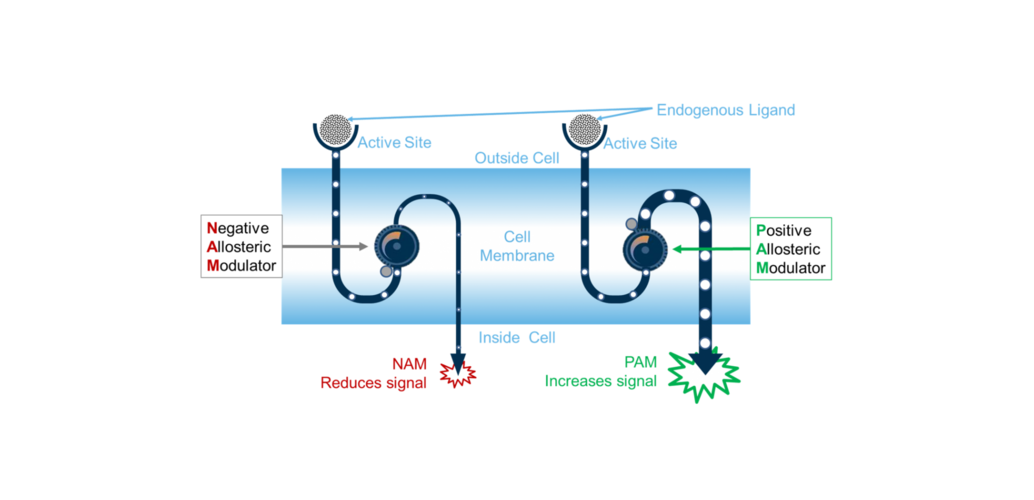
This potential stems from their ability to offer greater selectivity and better modulatory control at disease mediating receptors. Most marketed drugs bind receptors where the body’s own natural molecular activators (i.e. endogenous ligands) bind, specifically to a key part of each receptor’s anatomy called the “active site”. In short, most drugs must out-compete endogenous ligands in order to bind to the active site.
In contrast, allosteric modulators are non-competitive - binding receptors at different sites - the allosteric sites. This allows them to fine-tune receptor activity rather than simply turning signaling on or off. Instead, they act more like a dimmer switch, offering control over the intensity of activation, while allowing the body to retain its natural control over initiating receptor activation.
Allosteric modulators can either enhance or dampen signaling, depending on therapeutic need: Positive Allosteric Modulators (PAMs): Boost the receptor’s natural response, amplifying signaling strength. Negative Allosteric Modulators (NAMs): Reduce excessive receptor activity without shutting it down completely.
Allosteric modulator therapeutics represent a new generation of small-molecule medicines with potential benefits compared to traditional agonists and antagonists:
1. Precise Modulation of Neurotransmission: Fine-tune receptor responses more like a dimmer switch than an on/off button, likely reducing the risk of overactivation or disruption in unintended brain circuits;
2. Greater Specificity and Selectivity: By binding outside of the orthosteric site, allosteric modulators may achieve stronger target specificity, lowering the likelihood of off-target interactions and side effect;
3. Improved Safety and Tolerability: Allosteric modulators have the potential to work in concert with the body’s natural ligands, supporting physiological balance while avoiding the overstimulation or suppression often associated with traditional drugs.